
Realistic Prep Ideas for Regular Families
28th Nov 2025
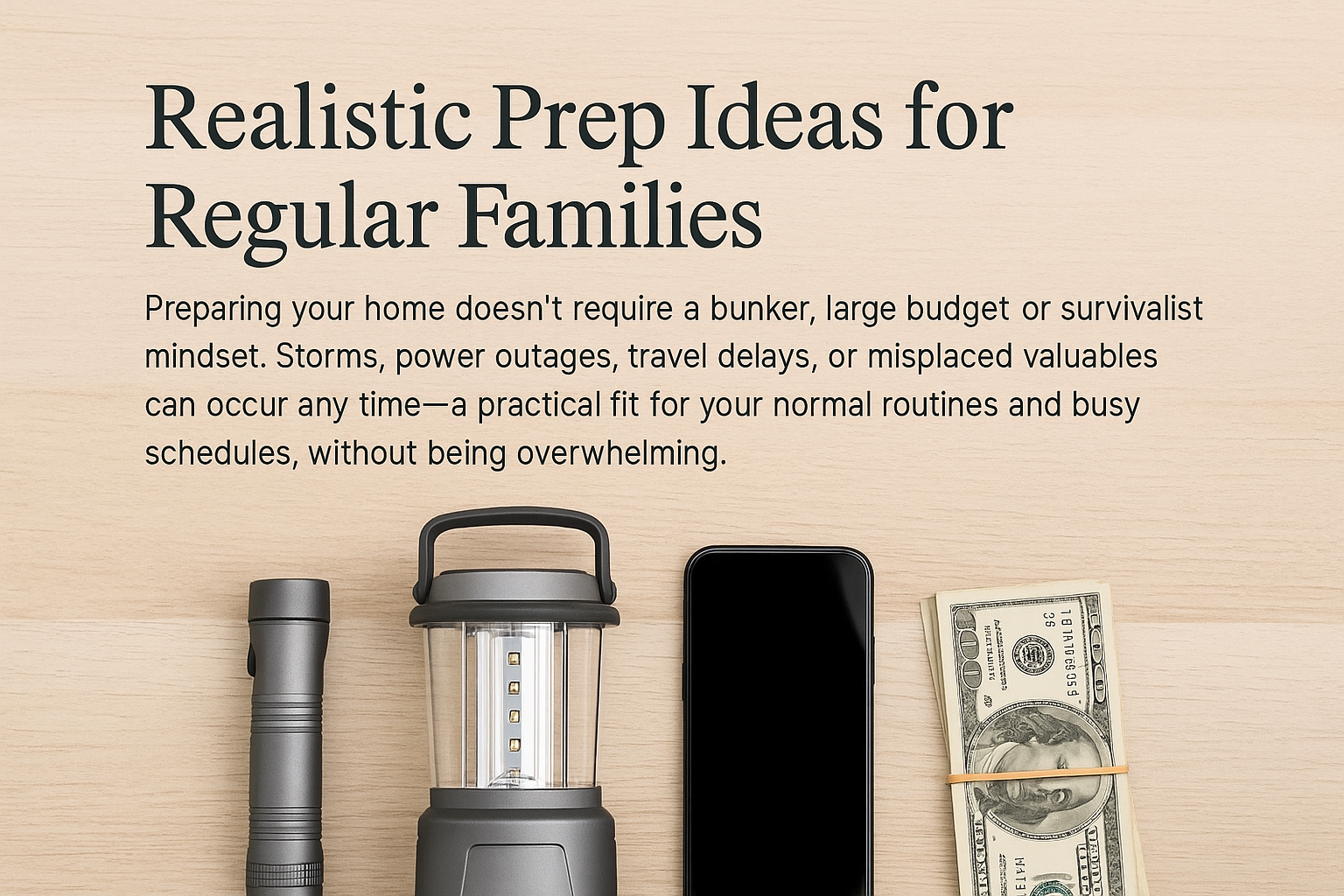
Preparing your home doesn’t require a bunker, a huge budget, or a survivalist mindset. Most families simply want to feel ready for the everyday surprises life throws at them—storms, power outages, travel delays, or even misplaced valuables. This guide focuses on practical steps that fit into normal routines and busy schedules, helping you strengthen your household’s resilience without being overwhelming.
Why Simple, Real-World Prepping Works
Small improvements stack up quickly. By focusing on realistic, manageable habits, families can stay safe and organized when the unexpected happens. These ideas are designed to be affordable, easy to maintain, and helpful all year long.
1. Build a Basic, Usable Emergency Kit
A family kit doesn’t need to be massive. Start with essentials you’ll actually use.
-
Flashlights and extra batteries
-
Battery pack for phones
-
First-aid basics
-
Bottled water
-
Simple food items with long shelf life
-
Copies of important documents
-
A compact hidden safe for small valuables
Tip: Keep it in an easy-to-reach spot, not buried behind closets.

2. Store Important Items Where You Can Reach Them
During stress, people forget where things are. A few smart placements help:
-
Medication in a labeled pouch
-
A fireproof or underground safe for essentials
-
Extra cash for small emergencies
-
A dedicated drawer for chargers, tools, and quick-grab items
3. Prep for Power Outages the Easy Way
Most outages last only a few hours. Small steps make it effortless:
-
Keep a lantern in the main living area
-
Pre-charge portable phone batteries
-
Have a backup way to warm food
-
Freeze a few water bottles for cooling or refrigerator support
4. Create a Simple “Communication Plan”
In an emergency, clarity matters.
-
Pick one out-of-state contact
-
Write down key phone numbers
-
Agree on a local meet-up spot
-
Teach children how to text “I’m safe”
5. Protect Valuables Without Complication
Not everything needs a bank vault. Everyday families can use:
-
A Small Hidden Safe for passports, backup cash, and essentials
-
A waterproof pouch for quick-grab items
-
Discreet home hiding spots for duplicates of keys or documents
- How to protect valuablses while traveling.
If you want a low-profile option that stays out of sight, an underground-style safe is an easy upgrade for home security without adding visual clutter.
6. Keep a Few Days of Food Without Stockpiling
Think “meals you already like” rather than huge storage tubs.
-
Canned protein
-
Instant rice or pasta
-
Shelf-stable snacks kids will actually eat
-
A small stock of bottled water
Rotate as part of normal cooking so nothing goes to waste.

7. Make a Quick “Grab Bag” for Unexpected Travel
A simple tote or backpack keeps travel hiccups from becoming stressful.
-
Phone cables
-
Toiletries
-
A change of clothes
-
Snacks and water
-
A small folder with essential documents
A Calm, Practical Call to Action
Small steps make your home feel more secure—and they don’t have to be complicated. If you want an easy way to protect essentials, consider adding a discreet safe that blends into everyday life. It’s a simple upgrade that gives families real peace of mind.
Related Reading
-
Why Hiding Emergency Essentials Inside Your Home Isn’t Enough Anymore
-
A Beginner’s Guide to Home Security for New Homeowners